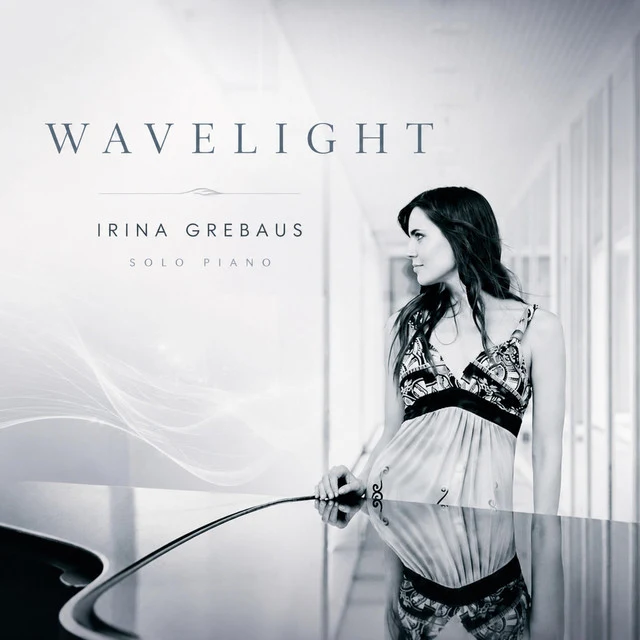
An original piano piece is a direct way to meet a composer’s musical language. In Wavelight, Irina Grebaus places the piano at the centre: a bright miniature with a continuous sense of motion. Rather than supplying a fixed story for the listener, this guide suggests a few ways to hear its flow, colour and shape.
Meet the music before explaining it
Start by listening to the complete recording without reading alongside it. Let the opening establish its own pace. You might notice a pattern, a change of register or a particular resonance before you identify a melody. Those first impressions are useful precisely because they are yours.
Wavelight is composed and performed by Irina Grebaus. That connection between writing and playing offers a focused introduction to her work as an artist. It is an original composition, rather than an arrangement of a familiar song.
Follow the movement
The piece is presented as a luminous piano miniature whose flowing motion recalls a gentle perpetual movement. A useful first question is not how fast it goes, but how it keeps moving. Notice whether your attention follows a repeated figure, a melodic line or the relationship between them.
On another listen, pay attention to the way a phrase changes while the movement continues. Repetition and variation can coexist: an apparently familiar gesture may carry a different colour when the harmony or register around it changes. There is no need to count or analyse every note.
Listen for light in the piano’s colour
Light is a listening image, not a literal scene that everyone must imagine. You can explore it by noticing brightness and depth, the space between notes and the way resonance remains after an attack. The same musical passage can feel more open or more intimate through changes in touch and balance.
Try a comfortable volume in a quiet room. If you return with headphones, keep the volume moderate and compare what draws your attention. The purpose is to hear the details, not to turn a short piece into an exercise or a promise of a particular effect.
An original piece within a wider musical world
Irina’s artistic profile brings together classical piano, the freedom of jazz and contemporary sounds. Those are useful points of orientation, but a composition does not need to fit a single label. Listen to the piece on its own terms before deciding what genre name you would give it.
Her solo videos offer a different perspective on interpretation, while SwissDuo with cellist Sandi Toka Nova introduces the dialogue between instruments. Hearing original music beside those collaborations helps distinguish composing, interpreting and arranging without placing them in competition.
Where to hear Wavelight next
The Music page offers a way into Irina’s compositions and the full Wavelight recording is available through the listening links on the site. The Videos page includes the official audio alongside solo performances. Open the player only when you want to listen; a full recording gives a different experience from a short preview.
After listening, choose one detail to revisit: the opening, a change in register or the way the music comes to rest. If you are planning a concert or an artistic collaboration, Contact is the place to discuss a programme. A recording introduces a musical voice; a programme gives that voice its context.
Questions & answers
Who composed Wavelight?
Wavelight is an original piano composition by Irina Grebaus, performed by the composer.
Is the Wavelight video a filmed concert performance?
The site identifies it as the official audio. Irina’s other solo videos offer filmed performances, including Hallelujah and The First Noël.